Search
Connect with me elsewhere


Latest tweets
What’s the big idea, anyway?
Posted in: Blog, Copyediting, Grammar by Sally Evans-Darby on 25 March 2012
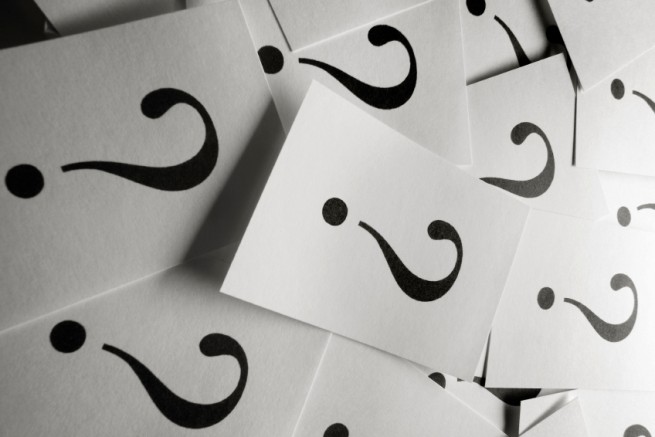
This week I look at what makes a copyeditor want to be a copyeditor – are we in it for the fame, or just the glory?
Naturally, working as a copyeditor comes with a promise neither for fame nor glory. But of course, if you’re a copyeditor, you’re unlikely to hanker after either of these things.
That’s not to say that all copyeditors are mousy, back-office types who just want to be heard and not seen. On the contrary, you’ll probably find that most are boisterous, forthright and opinionated (and those aren’t all just euphemisms for ‘rude’).
So what is it exactly that makes the average person – who otherwise appears well adjusted and, well, normal – yearn to don the editor’s cap? Freud might say it’s to do with a deep-seated need to gain approval from peers, the old pat-on-the-back feeling. I don’t know about that, but here’s my two-pence worth.
You do it because you’re a stickler for detail
You like things to be just so. You’re a lover of symmetry, of sense, of aesthetic equality. Things need to look neat, precise, measured. This goes beyond the simple need to correct the typos in a piece of writing in the name of ‘getting it right’. It calls to a deeper desire for the way that piece of writing is presented to ring with truth and clarity.
That rogue apostrophe in ‘for your children’s’ children’ isn’t just breaking the rules of English grammar, it’s offending your instinctive sense of linguistic beauty. It makes you, as the reader, stop dead in your tracks, splutter, and eventually toss the piece of writing aside with disgust. Reactions can be that extreme when you’re a stickler for detail.
You do it because you are in love with language
Consonants. Vowels. Declaratives. Elisions. Homonyms. Syntax. Adjectives. Vituperations. You are a logophile: you love language and always will – perhaps it was even your first love, when you learned to talk, read and write, even before that first crush in primary school. It’s not hard to see why so many people love language. It is our method of communication; it allows us to express ourselves, convey an idea, make a joke, describe a memory.
So to work with language every day is, to you, the perfect vocation. To analyse morpheme by morpheme, to pick sentences apart and put them back together so that they work even better than before, then to send them off into the world like perfectly oiled machines. This is one of the primary reasons I got into copyediting, and I’m sure editors and proofreaders the world over must share this passion for the endlessly curious, endlessly surprising, shape-shifting creature that is the English language. If they didn’t, it would be like someone with a nut allergy working in a peanut factory.
You do it because you are a language gate-keeper
You don’t just proofread a piece of writing because the author has requested a quick once-over for typos and you’re not too bad at spelling. Change that ‘your’ to ‘you’re’, ‘i’ after ‘e’ in ‘receipt’, and job’s a goodun. No, you see it as something higher, something far more important – you are a gate-keeper of the English language.
You’ve been charged with a sacred duty: protect and promote proper use of the language at any cost. To you, it’s about much more than just spotting the odd spelling mistake or inserting a missing full-stop. You’ve been given the gift of a good head for grammar and a knack for language usage, and you’ll stop at nothing to use those gifts to the max. Why spray-paint over the chipped paint on your bonnet when the whole car needs a repaint? You are the repainter, you take your duties seriously, and any written text that passes your way is much the better for it.
So there we have it – the stickler, the logophile, and the gate-keeper. Of course most copyeditors are bound to be a delightful mixture of all three; personally I think I’m majority-logophile. What made you get into editing or proofreading? What keeps you working in the field if you’ve been at it for a while? Send me your comments.